

Most people choose their rigging hardware before they fully understand how the system works. That’s not always a problem, but with pulleys, knowing the difference between fixed and movable can mean the difference between a setup that works smoothly and one that takes twice the effort.
Here’s a straightforward breakdown of both pulley types, how each one behaves under load, and what happens when you put them together.
What Is a Fixed Pulley?
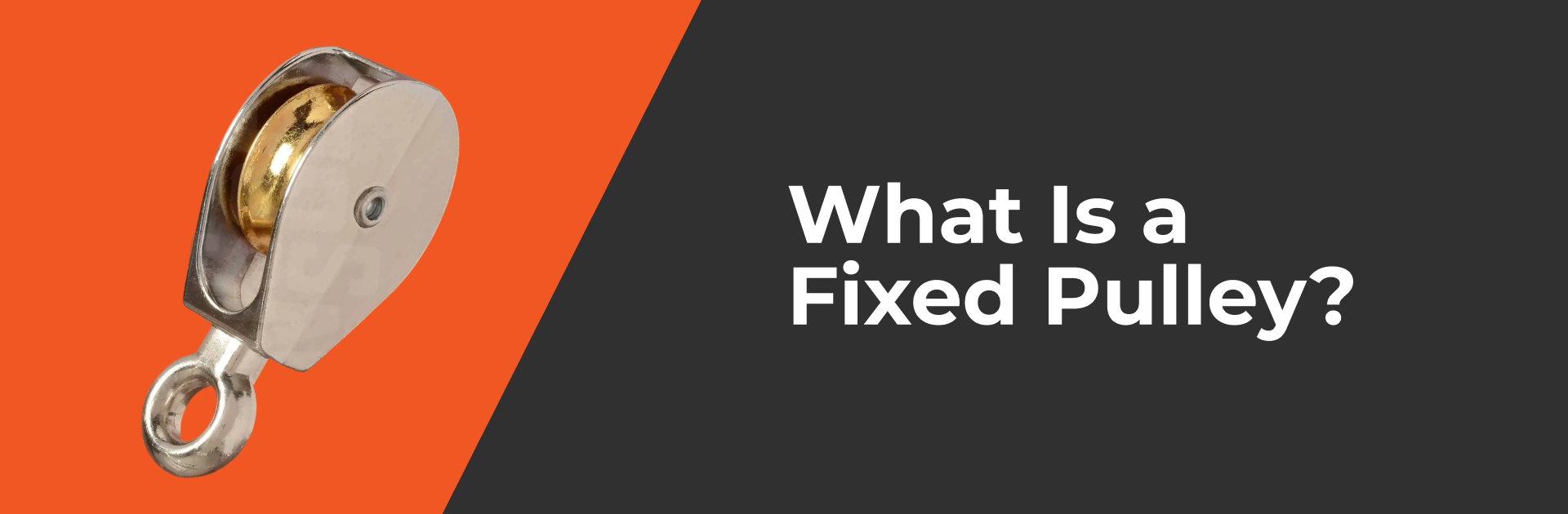
A fixed pulley is mounted in one position and stays there. The wheel spins freely, but the pulley housing itself is anchored to a wall, beam, ceiling, or any solid structure overhead.
What a fixed pulley does not do is reduce the force you need to apply. The load still requires the same amount of effort to lift. What it does do is change the direction of that force. Instead of pulling upward on a heavy load, you pull downward on the rope, which is far more practical in most rigging setups.
A flagpole is the clearest everyday example. The pulley at the top lets you stand on the ground and haul the flag up by pulling down. No mechanical advantage, but a much more manageable motion.
For rigging applications, a good fixed eye pulley mounts securely to a fixed anchor point and redirects the rope without putting stress on a single connection. The bearing design eliminates metal-to-metal contact, which keeps the operation smooth and extends the life of both the pulley and the rope.
What Is a Movable Pulley?
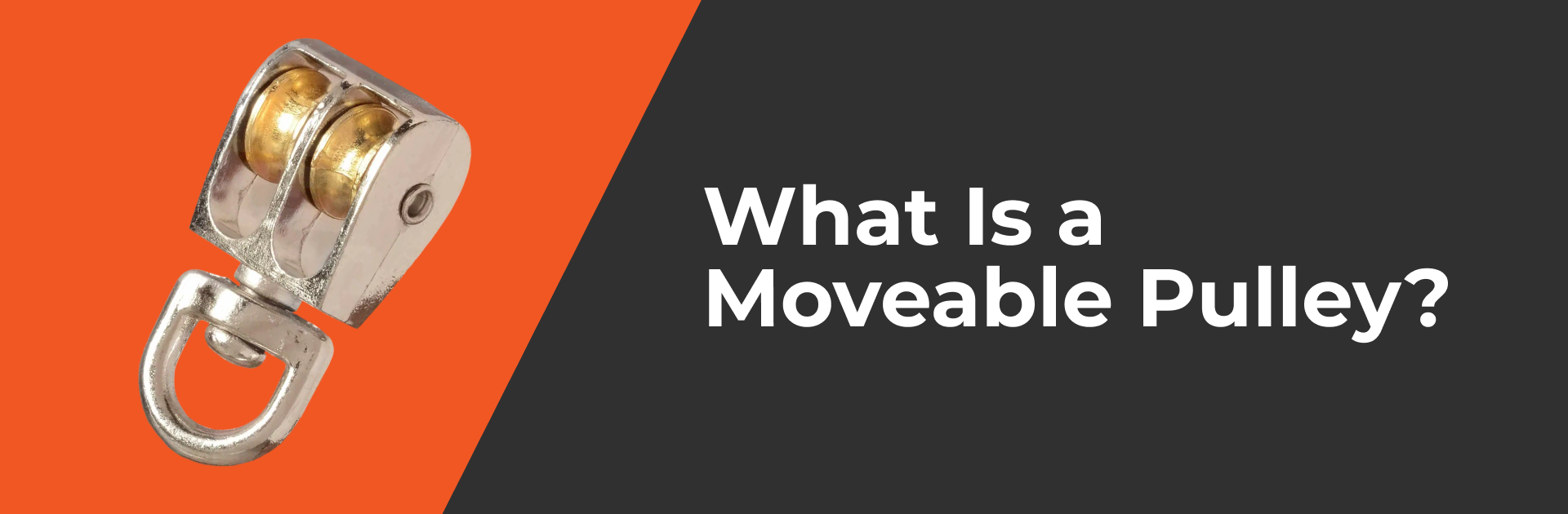
A movable pulley does something quite different. Instead of being anchored to a fixed point, it is attached directly to the load. As you pull the rope, the pulley and the load travel together.
Because the rope supporting the load runs through the pulley on both sides, the weight gets distributed across two rope segments instead of one. That cuts the required effort in half. This is a mechanical advantage in practice: you apply less force, and the system compensates by covering more rope distance to complete the lift.
One thing a movable pulley does not provide on its own is directional change. You are still pulling in the same general direction as the load’s movement. That’s not always convenient, which is exactly why fixed and movable pulleys are so often used together.
What Is the Main Difference Between a Fixed and Movable Pulley?
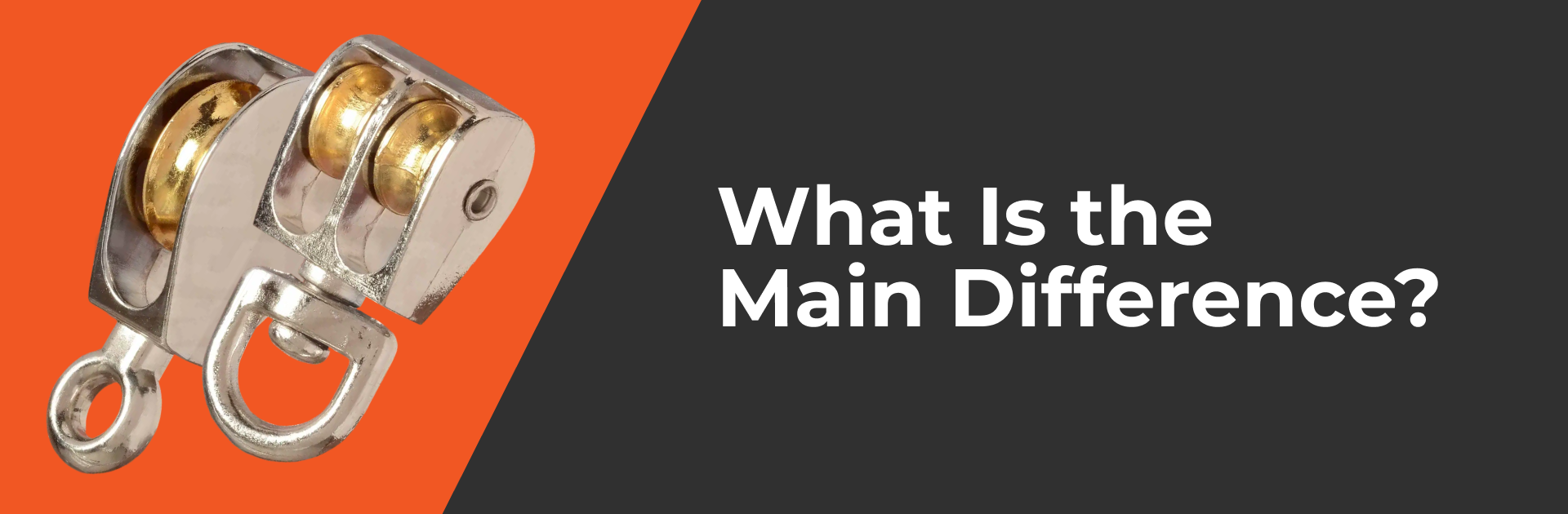
The core difference comes down to what each type is designed to accomplish.
A fixed pulley changes the direction of force but does not reduce the effort required. A movable pulley reduces the effort required but does not change the direction of force. They solve different parts of the same problem.
Think of it this way: if you need to change the angle of your pull, use a fixed pulley. If you need to reduce the load on your rope and your hands, use a movable pulley. If you need both, you combine them.
What Happens When You Combine Fixed and Movable Pulleys?
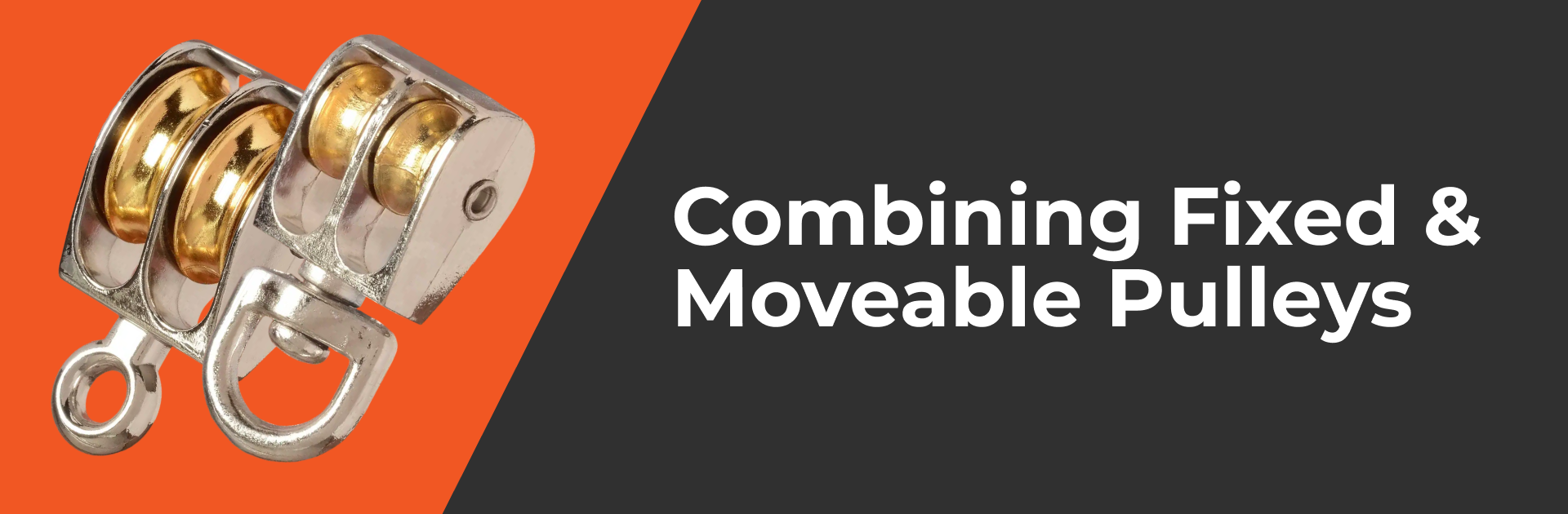
Combining fixed and movable pulleys creates what’s called a compound pulley system, sometimes referred to as a block and tackle. This is where rigging really opens up.
In a compound system, the fixed pulley redirects the rope while the movable pulley provides mechanical advantage. Together, they let you both change the direction of your effort and dramatically reduce the force required to lift the load.
The more movable pulleys you add to the system, the greater the mechanical advantage. A single movable pulley gives you a 2:1 ratio, meaning you only apply half the force. Two movable pulleys in a compound system can bring that up to 4:1 or higher, depending on configuration.
A swivel eye double pulley is a practical starting point for building compound systems. It handles more rope segments with less bulk and is rated for the kinds of working loads you encounter in industrial, marine, and agricultural rigging. Pair it with a fixed eye double pulley at the anchor point and you have a complete block and tackle setup ready to work.
Which Type Do You Actually Need?
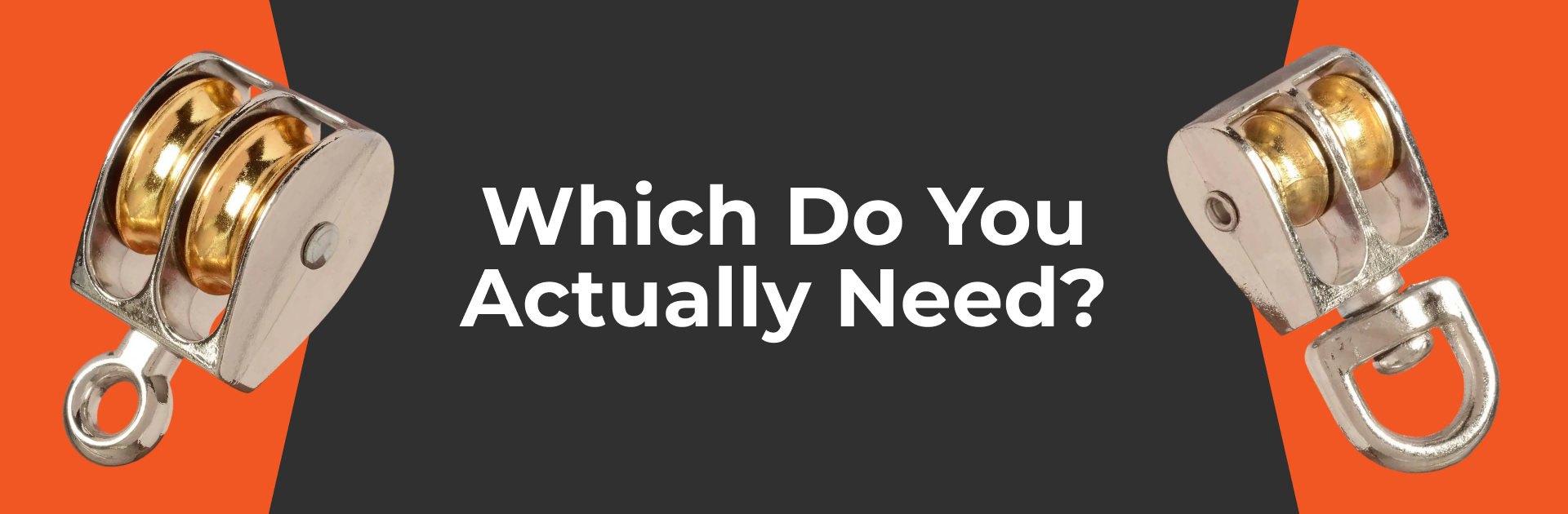
For most rigging tasks, the answer depends on two questions: how heavy is the load, and do you need to redirect the pull?
- Light loads where you just need directional change: a single fixed pulley handles this well
- Heavy loads where reducing effort is the priority: a movable pulley gives you the mechanical advantage you need
- Heavy loads where you also need a convenient pull direction: a compound system combining both types is the right setup
If you are outfitting a barn, a boat, a construction rig, or any application that involves regular lifting, it pays to think through the full system before you select hardware. The individual components are only as effective as the configuration you build around them.
We have spent nearly 50 years helping industries find the right hardware for the job. Browse our full range of pulleys and rigging hardware at Henssgen Hardware. Not sure which setup suits your application? Reach out and we can help you work through it.
0 Comments