
You’ve got a 90-pound Rottweiler who wants to spend the afternoon outside, and your fence situation is somewhere between “nonexistent” and “optimistic future project.” Sound familiar? A tie-out stake is one of the most practical, affordable solutions you can put in the ground today, but the hardware behind it matters more than most people realize.
Here’s everything you need to know to set up a tie-out that actually holds.
What Is a Tie-Out Stake?
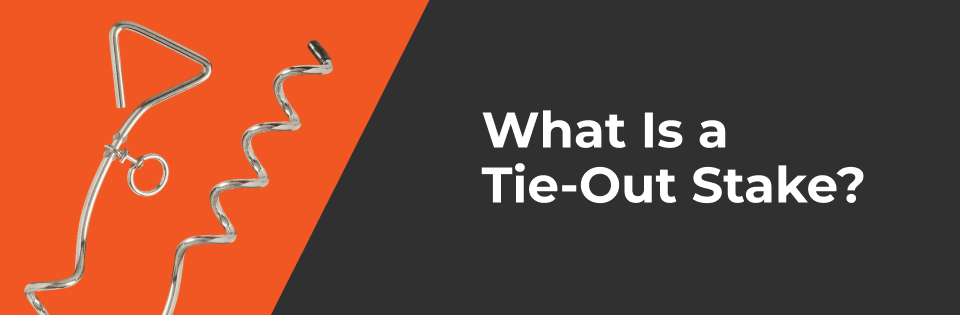
A tie-out stake is a ground anchor, typically made of heavy steel, that you drive into the soil to give your animal a fixed point to attach to. From that anchor, a cable or chain runs to a collar or harness, giving your dog, horse, or livestock a defined radius to move around in while staying put.
The concept is simple. The execution depends entirely on the quality of the stake and the hardware connecting everything together.
What Makes a Good Tie-Out Stake for a Large Dog?
For large breeds, this is where people most often get it wrong. A flimsy stake with a thin wire cable is fine for a 15-pound terrier. It is not fine for a German Shepherd, a Mastiff, or any dog with real pulling power.
For large dogs, you want a stake built from solid steel, not hollow tubing or composite metals that bend under sustained pressure. The threads or spiral design at the pointed end matter too. Deep threading grips the soil and resists the rotational pull that an excited dog generates by circling the stake repeatedly.
Our tie-out stake is built with exactly this in mind. Solid iron construction, a pointed end that drives cleanly into firm ground, and two attachment rings that give you real flexibility in how you rig the setup. That dual-ring design is useful for more than just dogs, and we’ll get to that shortly.
What Hardware Do You Need to Build a Secure Tie-Out Cable?
The stake is only one piece of the puzzle. The cable assembly connecting stake to animal is where a lot of setups fall apart, literally.
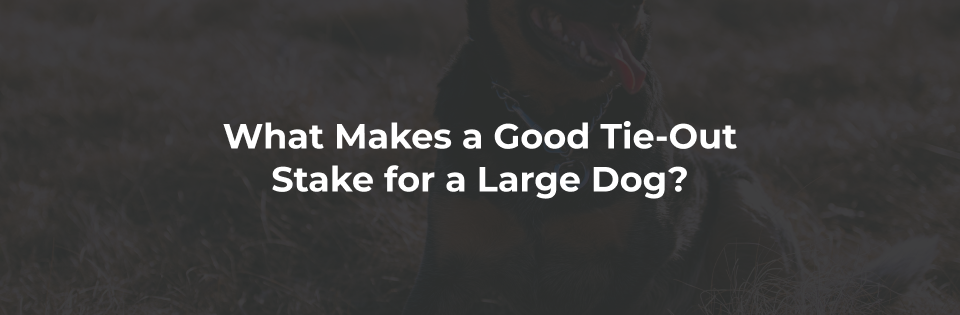
A solid tie-out cable needs three things working together: a reliable snap at the collar end, a swivel somewhere in the line to prevent twist buildup, and a secure snap at the stake end.
For the collar connection, a bolt snap or trigger snap with a swivel eye is the right call. The swivel is not optional. As your dog circles the stake, the cable twists. Without a swivel to absorb that rotation, the cable kinks, weakens, and eventually fails at the worst possible moment. A swivel eye bolt snap handles this cleanly and is rated for the kind of sustained load a large dog generates.
At the stake end, the same logic applies. A snap hook through the stake’s attachment ring keeps the cable secure while still allowing you to disconnect quickly when you need to. Simple, practical, and nothing to over-engineer.
Horses and Livestock: The Same Principles, Bigger Scale
Everything above scales up for larger animals, though the hardware choices shift accordingly. A horse or a goat doesn’t need a bolt snap. They need heavier connection hardware, stouter cable or rope, and a stake or anchor point rated for several hundred pounds of pull.
The dual-ring design on our stake gives you options here too. One ring for the lead rope, one ring for a water bucket clip or a second animal. For temporary setups at shows, trail rides, or farrier visits, a good stake in firm ground handles the job without any permanent installation.
For livestock tethering, the connection hardware at each end still deserves attention. A sloppy knot or an undersized snap is the weak point that fails when the animal startles.
A Few Practical Notes Before You Drive That Stake

Check your soil before you commit to a location. Sandy or loose soil pulls out under sustained tension. If your ground is soft, go deeper with the stake or look at heavier anchor options. Also walk your dog around the full radius of the cable before leaving them unattended. You want to know what obstacles fall inside that circle before they find them on their own.
We have spent nearly 50 years helping people find the right hardware for jobs exactly like this one. Take a look at our tie-out stake and the snap hook hardware that completes the setup. If you’re building something custom or working with livestock at scale, reach out and we’ll help you work through it.
0 Comments