
If you have ever stood in the hardware aisle staring at two heavy-duty hooks that look nearly identical, you are not alone.
When it comes to towing, rigging, and securing heavy loads, the hardware you choose dictates the safety of the job. Two of the most common players in this field are the clevis grab hook and the clevis slip hook.
While they might look similar to the untrained eye, they perform opposite functions. Using the wrong one can lead to damaged chains, insecure loads, or dangerous slipping.
Whether you are rigging a tow chain or securing equipment for transport, understanding the “slip hook vs grab hook” debate is essential. Here is your guide to choosing the right hardware for the job.
The Clevis Grab Hook: The “Brake”
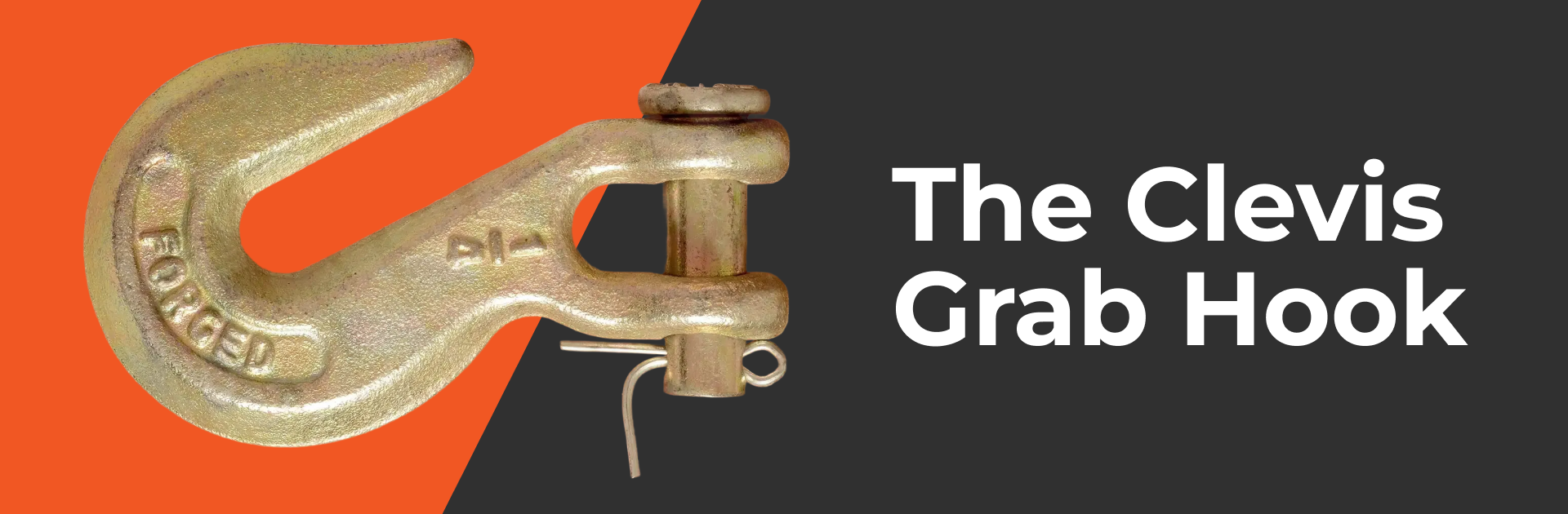
A grab hook is designed to do exactly what its name implies: it grabs.
These hooks feature a narrow throat (the opening of the hook) that is specifically sized to slot between the links of a chain. Because the throat is narrow, the chain link cannot slide through it. Instead, the hook locks onto the specific link you choose, holding the chain firmly in place.
You will rarely see a safety latch on a standard grab hook because the chain itself acts as the locking mechanism once it is seated in the narrow groove.
Best used for:
- Shortening chains: If your tow chain is too long, a grab hook allows you to “choke up” on the chain to the exact length you need.
- Static Connections: When you need the load to stay exactly where you put it without sliding.
- Transport Binding: Essential for tying down heavy machinery where slack is the enemy.
If you need a reliable connection that won’t budge, look for high-quality clevis grab hooks that match the grade of your chain.
The Clevis Slip Hook: The “Cinch”
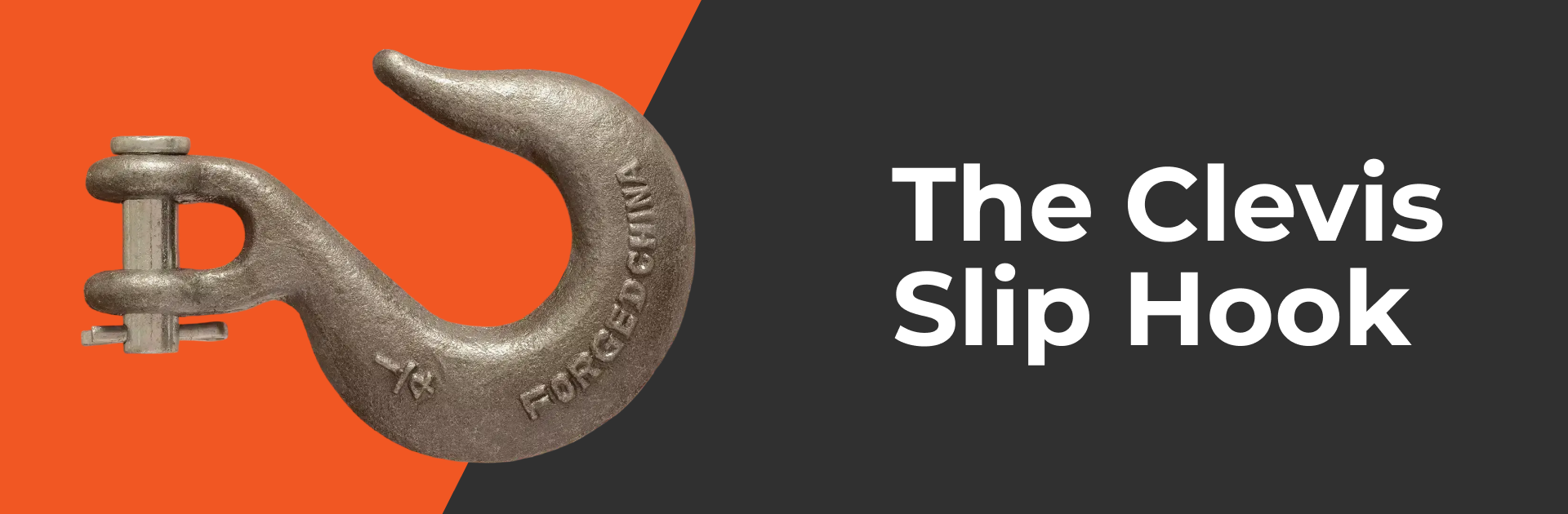
On the other side of the spectrum is the slip hook.
Unlike the grab hook, a slip hook features a wide, rounded throat. This design allows the chain to slide freely through the hook rather than locking into a specific link.
Slip hooks almost always feature a safety latch. This is because the chain is moving freely through the hook; without a latch, a moment of slack could cause the chain to pop out.
Best used for:
- Creating Nooses or Loops: If you need to wrap a chain around a log, a rock, or a vehicle axle, you use a slip hook. As you pull, the chain slides through the hook, tightening the loop around the object.
- Towing: Ideal for the end of the chain attached to the vehicle, allowing for articulation and movement.
- Lifting: Used when you need the sling to tighten around the load as it is lifted.
For operations requiring a secure sliding connection, clevis slip hooks with durable safety latches are the industry standard.
Slip Hook vs. Grab Hook: The Main Differences
To simplify the choice, here is a quick breakdown of how they compare:
- Throat Width: Grab hooks have a narrow throat to lock the chain; slip hooks have a wide throat to let the chain slide.
- Latches: Slip hooks usually have safety latches to keep the moving chain contained. Grab hooks usually do not, as the chain is fixed in place.
- Action: Grab hooks act as a brake (static). Slip hooks act as a cinch (dynamic).
Can I Use a Grab Hook to Shorten a Chain?
Yes. In fact, this is the primary purpose of a grab hook.
If you are towing a vehicle and your 20-foot chain is dragging on the asphalt, you need a grab hook. By looping the chain back and hooking it onto itself with a grab hook, you effectively shorten the working length of the chain without cutting it.
Caution: Never try to shorten a chain using a slip hook. Because the chain slides through the throat, a slip hook will simply slide back down to the end of the loop, failing to shorten the chain and potentially causing a sudden jolt to your towing vehicle.
Which One Fits Your Needs?
The decision comes down to the mechanics of your specific job.
If you are pulling fence posts, dragging logs, or creating a choke-point around debris, you need the cinching action of a slip hook.
If you are tying down a tractor to a trailer, or need to adjust the length of your tow chain to prevent drag, you need the locking capability of a grab hook.
For many rigging setups, the answer is often both. A versatile tow chain often features a grab hook on one end (for length adjustment) and a slip hook on the other (for attachment).
The Bottom Line
Hardware is only as good as its application. The difference between a smooth towing operation and a dangerous equipment failure often comes down to knowing which hook to use.
Remember to always check the Working Load Limit (WLL) of your hooks to ensure they match or exceed the rating of your chain. A hook is often the point of failure if mismatched hardware is used.
Whether you need the static hold of a grab hook or the versatile movement of a slip hook, choosing industrial-grade components ensures safety and longevity.
Explore Henssgen Hardware’s full selection of rigging hardware and hooks to find the exact fit for your next project.
0 Comments